


Description
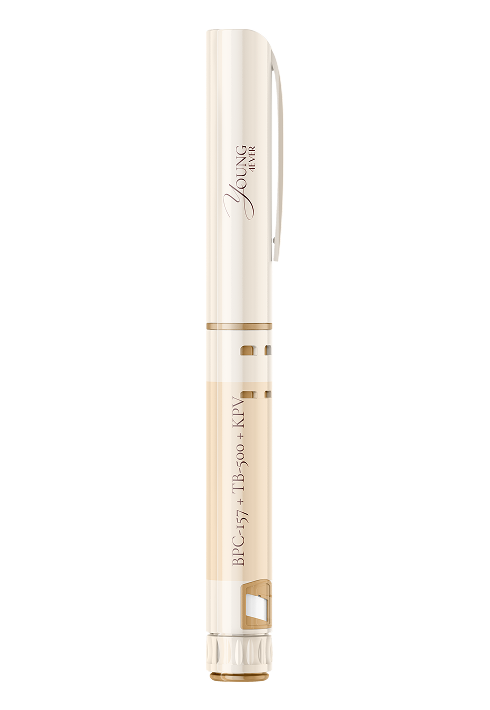
A Three-Peptide Regenerative Formula
Tissue recovery requires more than the replacement of damaged cells. The body must regulate inflammatory signals, maintain circulation, recruit repair-related cells, rebuild structural tissue, and gradually restore normal function.
BPC-157 + TB-500 + KPV supports this wider regenerative environment. BPC-157 contributes tissue-protective and vascular mechanisms, TB-500 supports cellular movement and structural remodeling, and KPV helps maintain a balanced inflammatory response.
The blend is particularly relevant when physical stress affects muscles, tendons, ligaments, soft tissue, or the gastrointestinal system. Its multi-pathway profile provides broader support than formulas focused on only one stage of recovery.
BPC-157 for Tissue and Gut Support
BPC-157 is a 15-amino-acid peptide derived from a sequence associated with gastric protective proteins. Its biological profile includes connective tissue recovery, vascular signaling, gastrointestinal integrity, and cellular protection.
Tendons and ligaments often recover slowly because they receive less blood flow than muscle tissue. BPC-157 is associated with biological pathways involved in circulation and tissue repair, making it relevant to programs focused on mobility, connective tissue resilience, and recovery after physical overload.
BPC-157 also has a strong connection with gastrointestinal wellness. The digestive tract depends on an intact protective barrier, balanced inflammatory signaling, and effective cellular renewal. By supporting this environment, BPC-157 gives the blend both physical-recovery and gut-focused applications.
TB-500 for Cellular Migration and Remodeling
TB-500 is associated with thymosin beta-4 biology and the regulation of actin. Actin is a structural protein involved in cell shape, movement, organization, and the biological processes required for tissue repair.
During recovery, repair-related cells must migrate toward the affected area and participate in rebuilding damaged structures. TB-500 supports mechanisms connected with cellular migration, angiogenic signaling, and extracellular tissue remodeling.
This profile makes TB-500 particularly relevant to muscle recovery, tendon and ligament support, mobility, and restoration after repetitive physical stress. Within the blend, it complements the protective effects of BPC-157 by contributing to the structural and cellular stages of regeneration.
KPV for Inflammatory Balance
KPV is a short tripeptide fragment associated with alpha-melanocyte-stimulating hormone biology. It is connected with inflammatory regulation, immune signaling, gastrointestinal balance, and the protection of sensitive tissues.
Inflammation is a normal part of recovery, but an excessive or prolonged response can interfere with tissue comfort and restoration. KPV supports pathways involved in maintaining a measured inflammatory response without functioning as a general immune stimulant.
Its gut-focused profile is also important within this formula. KPV is associated with intestinal inflammatory balance and mucosal support, complementing the gastrointestinal integrity mechanisms connected with BPC-157.
BPC-157 + TB-500 + KPV Benefits
The primary benefit of this blend is the integration of three distinct but complementary peptide profiles. BPC-157 contributes tissue-protective, vascular, and gastrointestinal support, while TB-500 focuses on cellular migration, actin regulation, and structural remodeling.
KPV enhances the formula through its association with inflammatory balance, immune signaling, and mucosal support. Its inclusion makes the blend especially relevant when recovery goals involve both connective tissue and gastrointestinal wellness.
BPC-157 + TB-500 + KPV is positioned as a comprehensive peptide blend for tissue recovery, tendon and ligament support, muscle restoration, inflammatory balance, gut integrity, mobility, and regenerative wellness.
Reviews
There are no reviews yet.