Epithalon: Cellular mechanisms behind healthy aging support
Epithalon Peptide: What Research Suggests About Cellular Aging and Biological Rhythms
Epithalon peptide (also written as Epitalon) is a synthetic tetrapeptide built from four amino acids: alanine, glutamic acid, aspartic acid and glycine. It has attracted attention in longevity research because experimental studies have examined its relationship with telomere biology, the pineal gland and age-related regulatory processes.
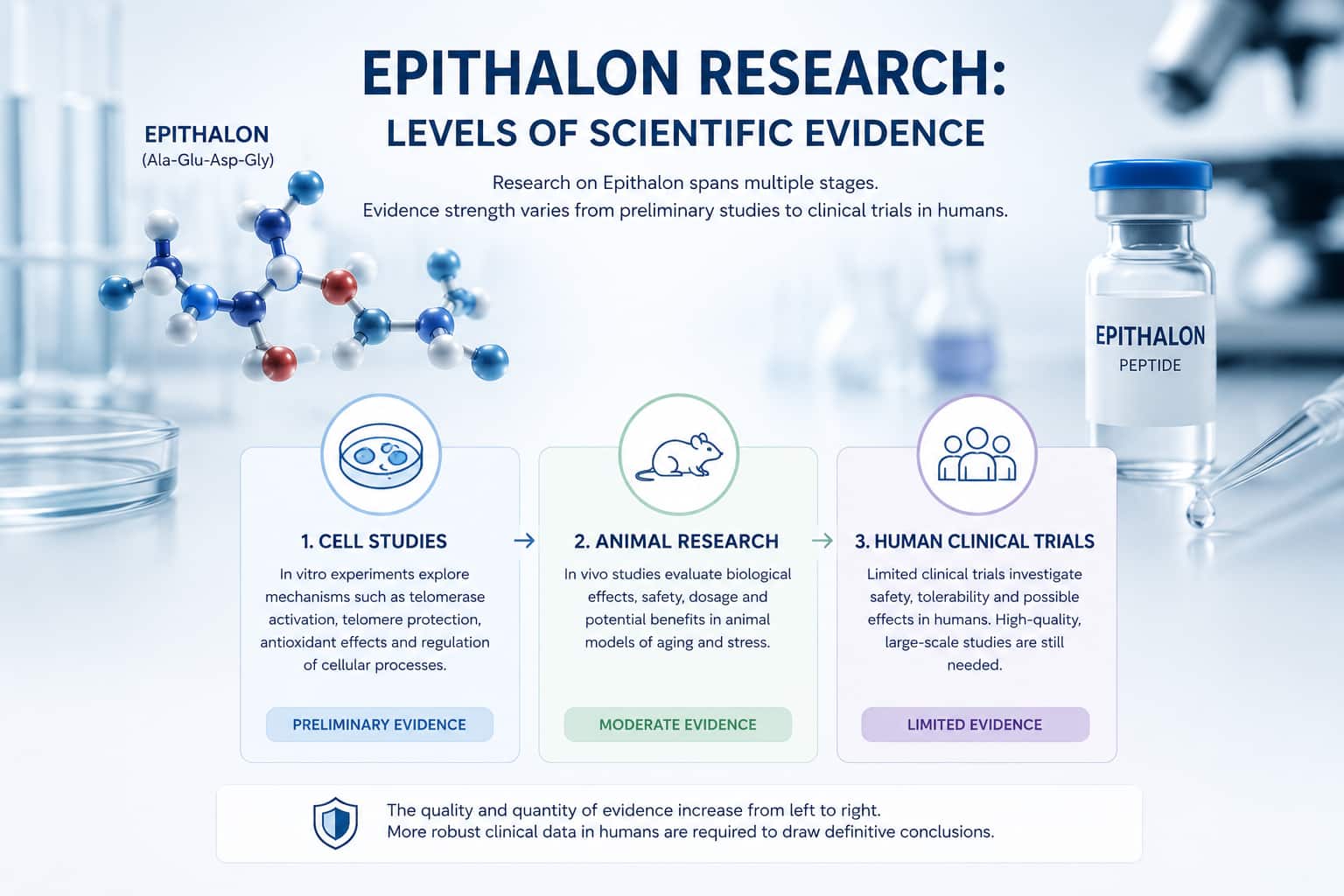
The important distinction is between an interesting biological mechanism and a proven clinical outcome. Much of the discussion around Epithalon comes from laboratory, animal or relatively limited human research. That makes it a research-oriented peptide rather than an established treatment for extending lifespan or reversing aging.
Why Epithalon became part of the longevity conversation
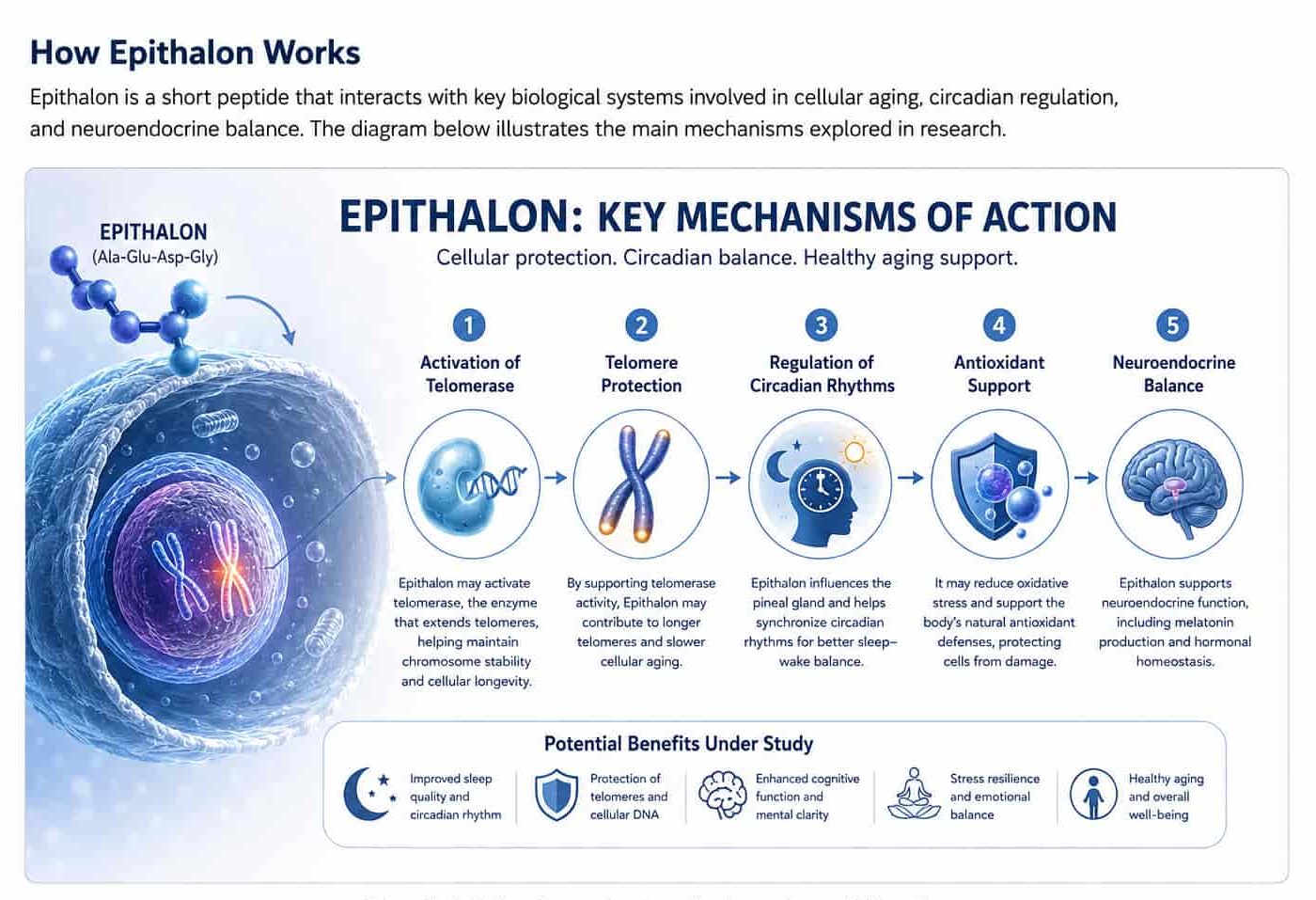
Short peptides can participate in cellular signaling and regulatory pathways. Epithalon has been investigated within a broader field of peptide bioregulation, particularly in relation to changes that occur with age. The strongest public interest has centered on two areas: telomere maintenance and circadian regulation.
These topics matter because they sit upstream of many visible signs of aging. Telomeres are linked to replicative capacity at the cellular level, while circadian rhythms influence sleep, hormonal timing, metabolism and recovery. Neither pathway, however, should be interpreted as a simple on/off switch for longevity.
Telomeres: the mechanism that receives the most attention
Telomeres are repetitive DNA structures at chromosome ends. They help protect genetic material during cell division. In many somatic cells, telomeres gradually shorten as divisions accumulate. Critically short telomeres can contribute to cellular senescence, although biological aging is far more complex than telomere length alone.
Telomerase is an enzyme capable of adding telomeric repeats. Experimental work involving Epithalon has reported telomerase-related effects and changes in telomere length in cell models. This provides a plausible reason for scientific interest, but it does not demonstrate that taking Epithalon reliably lengthens human lifespan or produces systemic rejuvenation.
The pineal gland, melatonin and circadian timing
A second research theme concerns the pineal gland, which participates in melatonin production and the timing of the sleep-wake cycle. Melatonin secretion normally follows a strong day-night pattern and acts as a biological signal of darkness.
Peptide bioregulator research has explored age-associated changes in pineal function and melatonin rhythms. This is why Epithalon is frequently mentioned in discussions about sleep and biological clocks. It should not be treated as interchangeable with melatonin itself, and the available evidence does not establish it as a standard therapy for insomnia.
Sleep problems can arise from circadian disruption, stress, medications, sleep apnea, pain, endocrine disorders and many other causes. A peptide-based explanation can therefore be too narrow when the underlying problem has not been identified.
Oxidative stress and cellular resilience
Reactive oxygen species are not inherently harmful: cells use them in normal signaling. Oxidative stress develops when reactive species and antioxidant defenses become imbalanced. Because this imbalance is associated with several age-related processes, antioxidant markers are common endpoints in longevity research.
Experimental peptide studies have reported changes in markers related to antioxidant defenses and lipid peroxidation. These observations are relevant to mechanistic research, but they are not sufficient to classify Epithalon as a broadly proven antioxidant therapy or a substitute for established prevention strategies.
Does Epithalon support cognition or immunity?
Claims about memory, concentration and immune function are common in commercial descriptions of Epithalon. The scientific picture is more restrained. Aging affects both nervous-system function and innate and adaptive immunity, and short peptides have been studied in these contexts, but the clinical significance of many reported effects remains uncertain.
Phrases such as “boosts immunity” or “restores cognitive function” imply a degree of certainty that the evidence does not support. Cognitive symptoms and immune abnormalities also have many possible causes, so they should not be reduced to a single peptide pathway.
Epithalon and weight loss: a separate question
Epithalon is not a weight-loss drug and does not share the established appetite-regulating mechanism of GLP-1 receptor agonists. There is no well-established direct mechanism showing that it reliably suppresses appetite or produces clinically meaningful fat loss.
Circadian health can influence metabolic regulation indirectly. Poor sleep is associated with changes in appetite, food choices, glucose regulation and recovery. That connection may make circadian biology relevant to weight management, but it does not turn Epithalon into an obesity treatment.
What the evidence can and cannot tell us
- Cell and laboratory findings can identify mechanisms, but they cannot by themselves establish a clinical anti-aging effect in humans.
- Telomerase and telomere findings are among the most discussed aspects of Epithalon research.
- Pineal and circadian research provides a rationale for studying sleep-related effects, not proof that Epithalon treats insomnia.
- Antioxidant, cognitive and immune claims require more robust clinical confirmation.
- Claims of guaranteed life extension, rejuvenation or disease prevention go beyond what the current evidence can support.
Safety, product quality and unanswered questions
A major limitation is the lack of large, contemporary randomized trials capable of defining efficacy, optimal dosing, long-term safety and the frequency of adverse effects with confidence. This is especially important when a compound is promoted for repeated or long-term use.
Extra caution is warranted during pregnancy or breastfeeding, in children and adolescents, and in people with cancer, autoimmune disease, chronic medical conditions or ongoing prescription therapy. These situations require individualized medical assessment rather than self-directed experimentation.
Product quality is another practical issue. For research peptides, identity, purity, sterility and storage conditions are fundamental. Packaging or a stated concentration alone cannot verify these characteristics.
A practical way to read Epithalon claims
- Identify the evidence level: cell culture, animal model, observational human data or randomized clinical trial.
- Ask whether the outcome is a laboratory marker or something patients can actually feel or measure clinically.
- Do not equate a plausible mechanism with a proven health benefit.
- Be skeptical of absolute language such as “reverses aging,” “repairs immunity” or “guarantees longer life.”
- Keep established longevity fundamentals in perspective: adequate sleep, physical activity, nutrition, smoking avoidance and management of blood pressure, lipids and glucose.