


Peptide sprays: features, benefits and potential applications
What Are Peptide Sprays?
Peptides are short chains of amino acids that participate in various biological signaling processes. Depending on their structure, they can interact with receptors, enzymes and other cellular pathways.
Nasal peptide formulations are particularly interesting because the nasal mucosa has a rich blood supply and may allow certain compounds to enter systemic circulation. However, not every peptide is equally suitable for this route, and absorption can vary considerably.
Advantages of the Spray Format
The main benefit of peptide sprays is their convenience. They do not require needles or injection equipment and can be easier to incorporate into a daily routine.
Potential practical advantages include:
- convenient administration;
- needle-free application;
- compact and portable format;
- easy integration into a wellness routine;
- suitability for certain nasal formulations.
Convenience does not necessarily mean greater biological effectiveness. The amount of peptide absorbed depends on its individual properties and formulation.
Peptides and Longevity Research
Interest in peptides has grown alongside research into longevity, cellular signaling and healthy aging.
Different compounds are being investigated for their potential involvement in:
- cellular energy metabolism;
- mitochondrial function;
- oxidative stress;
- circadian rhythms;
- neurological processes;
- tissue recovery.
Compounds such as Selank, Epitalon and NAD-related formulations are frequently discussed in this field, although their mechanisms and evidence differ significantly.
Laboratory or animal findings should not automatically be interpreted as proven clinical benefits in humans.

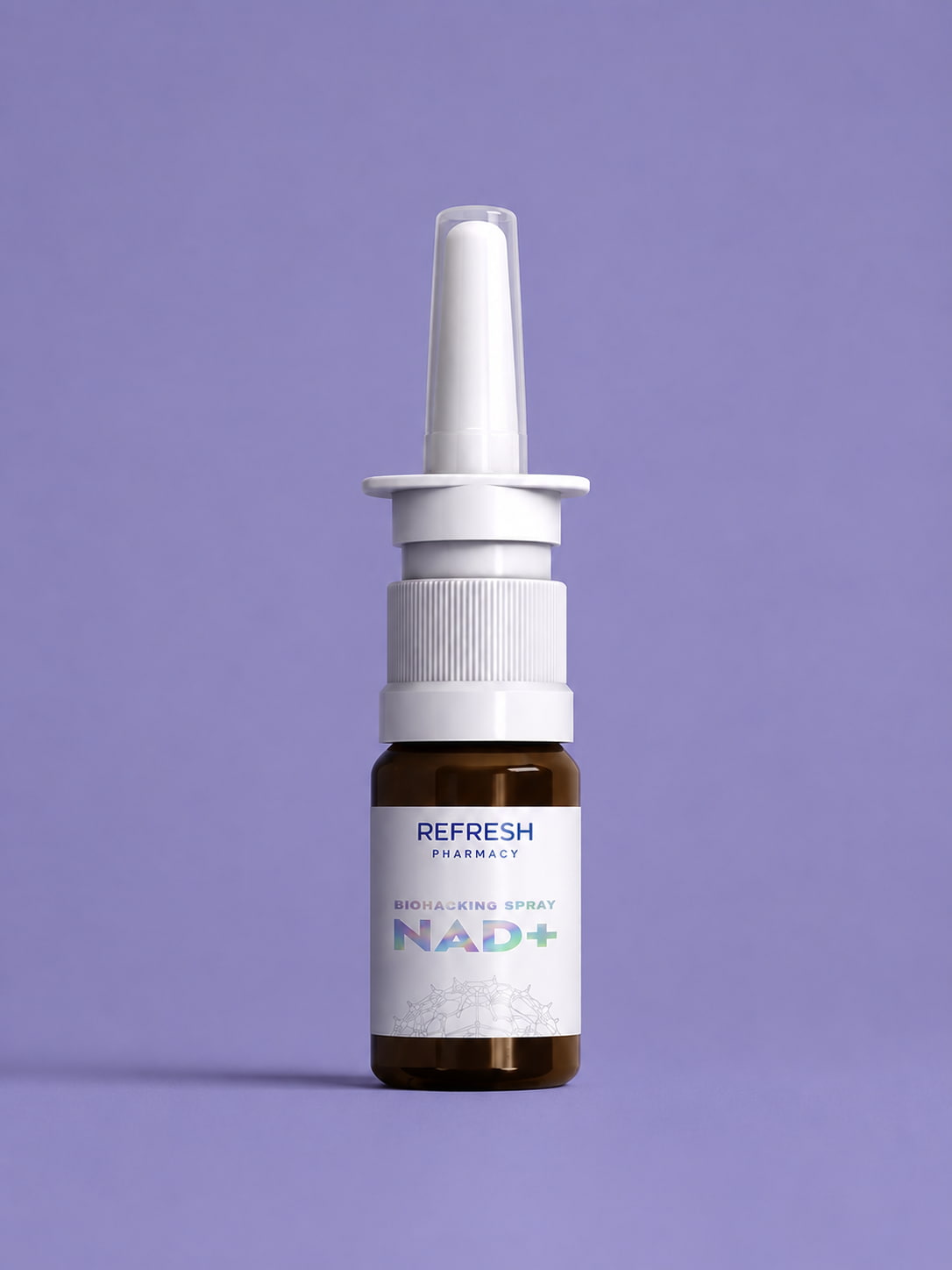
Nasal Delivery and Absorption
The nasal cavity provides an alternative route for delivering certain biologically active compounds. Some substances may be absorbed through the nasal mucosa and partially avoid gastrointestinal degradation.
For peptides, however, absorption depends on molecular size, stability, formulation technology and individual physiology. Evidence supporting one peptide spray cannot necessarily be applied to another product.
Product Quality and Safety
Quality is especially important when evaluating peptide formulations. Peptides can be sensitive to temperature, light and pH, while improper storage may affect their stability.
Important factors include:
- peptide identity and purity;
- concentration;
- formulation stability;
- manufacturing standards;
- storage requirements;
- quality-control procedures.
The stated concentration on packaging alone does not confirm product purity or effectiveness.
Conclusion
Peptide sprays offer a convenient, needle-free delivery format that is attracting interest in peptide research, wellness and longevity science. Their potential applications include cellular metabolism, circadian biology, neurological research and other areas of biological regulation.
However, the evidence varies considerably between individual peptides. The specific compound, formulation, route of administration, product quality and available human research should all be considered when evaluating a peptide spray.