



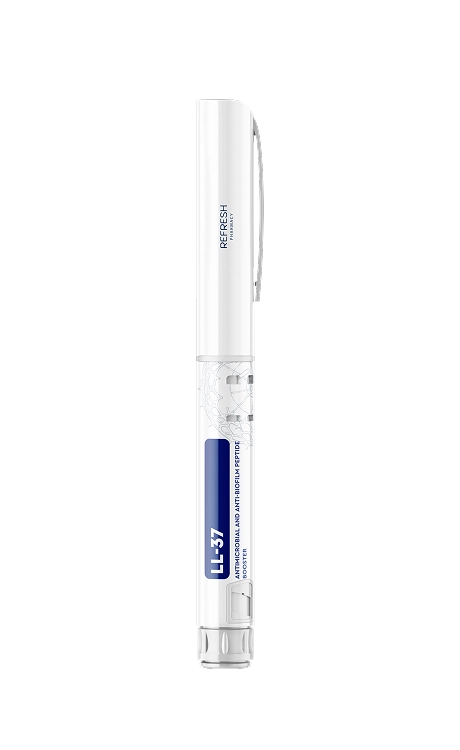
The Body’s Natural Defense Peptide
LL-37 belongs to the cathelicidin family of antimicrobial peptides. In humans, it is produced from the precursor protein hCAP18 and is expressed by several cell types, including neutrophils, macrophages, epithelial cells, and cells found in the skin and respiratory tract.
Antimicrobial peptides are small molecules used by the body to recognize and respond to potential microbial threats. They act early in the immune response, often before the slower adaptive immune system has produced a highly specific reaction.
LL-37 is found at biological surfaces that regularly interact with the external environment. These include the skin, airways, digestive tract, and other mucosal tissues where strong but carefully regulated protection is essential.
Broad Antimicrobial Activity
LL-37 is associated with defense against a range of microorganisms. Its positively charged structure allows it to interact with negatively charged microbial membranes, affecting their integrity and normal function.
This membrane-focused activity differs from conventional antibiotic mechanisms that target specific microbial enzymes or metabolic processes. LL-37 forms part of a wider biological defense network that includes physical barriers, immune cells, signaling molecules, and the local microbiome.
The peptide’s profile includes activity associated with certain bacteria, fungi, and enveloped viruses. Its function is not limited to direct antimicrobial action, as LL-37 also helps coordinate the immune environment around areas exposed to microbial stress.
Innate Immunity and Cellular Communication
The innate immune system responds quickly when the body encounters a potential threat. It relies on physical barriers, antimicrobial molecules, phagocytic cells, and signaling proteins that communicate the location and intensity of the challenge.
LL-37 can influence the movement and activity of several immune-cell populations. It is associated with chemotactic signaling, which helps recruit immune cells to tissues where additional protection or repair may be required.
This communication role gives LL-37 a more complex profile than a simple antimicrobial compound. It participates in the relationship between direct microbial defense, inflammatory signaling, and the transition toward tissue recovery.
What Defines LL-37
LL-37 combines several biological functions within one naturally occurring peptide. Its profile includes antimicrobial defense, innate immune communication, mucosal protection, skin-barrier support, inflammatory regulation, and tissue recovery.
These actions are closely interconnected because the body must control microbial exposure while limiting unnecessary tissue damage. It must then transition efficiently from defense toward restoration once the immediate challenge has been managed.
LL-37 is positioned as an immune and barrier-support peptide for microbial balance, skin resilience, mucosal wellness, cellular protection, and regenerative care. Its broad activity makes appropriate medical supervision especially important when it is incorporated into a structured wellness program.