


NAD+ for Cellular Energy
Interest in NAD+ has grown significantly in the fields of longevity, cellular health, metabolic optimization, and recovery. NAD+ availability changes with age and may also be influenced by metabolic stress and increased cellular demand, making NAD+ metabolism an important area of research in healthy aging and cellular resilience.
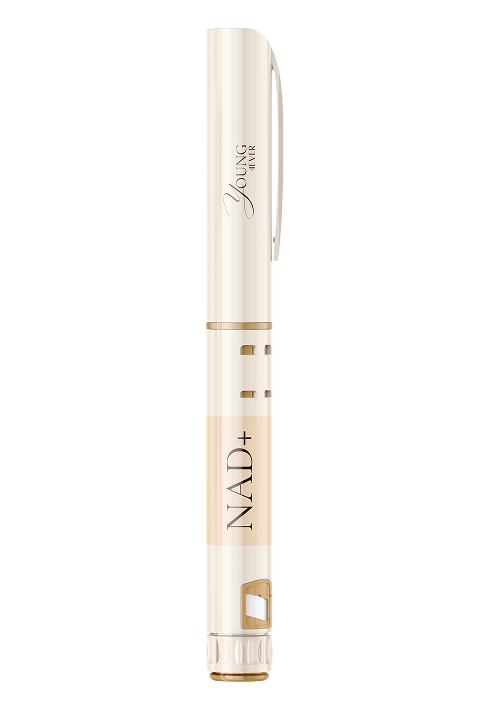
The NAD+ Pen provides an injectable delivery format designed for structured wellness and metabolic support programs where cellular energy, recovery, cognitive performance, and age-related metabolic changes are key areas of focus.
One of the primary biological functions of NAD+ is its role in cellular energy metabolism. NAD+ participates in oxidation-reduction reactions that allow cells to extract energy from carbohydrates, fats, and other nutrients.
During glycolysis, the citric acid cycle, and mitochondrial oxidative metabolism, NAD+ accepts electrons and is converted into NADH. NADH then transfers these electrons to the mitochondrial electron transport chain, contributing to the processes that ultimately generate ATP — the principal energy currency used by cells.
This NAD+/NADH cycle is therefore closely connected with mitochondrial energy production. Tissues with high energy requirements, including the brain, muscles, heart, and other metabolically active organs, depend on efficient cellular energy metabolism for normal function.
However, NAD+ does considerably more than participate in ATP production.
Healthy Aging and Recovery
NAD+ also serves as a required substrate for sirtuins, a family of NAD+-dependent enzymes involved in metabolic regulation, cellular stress responses, mitochondrial function, and pathways associated with healthy aging. Because sirtuin activity depends on NAD+ availability, the relationship between NAD+ and sirtuin signaling has become an important area of longevity research.
Another major NAD+-dependent pathway involves poly(ADP-ribose) polymerases, or PARPs. These enzymes participate in cellular responses to DNA damage and consume NAD+ during DNA repair processes. This connects NAD+ metabolism directly with mechanisms involved in maintaining genomic stability and normal cellular repair.
NAD+ is also involved in cellular redox balance. By continuously cycling between NAD+ and NADH, it helps regulate electron transfer and metabolic reactions throughout the cell. Maintaining this balance is important for efficient energy utilization and the ability of cells to respond to changing metabolic demands.
The relationship between NAD+ and mitochondria is particularly important. Mitochondria require coordinated redox reactions to convert nutrients into ATP efficiently. Changes in NAD+ availability can therefore influence multiple aspects of mitochondrial metabolism and cellular energy homeostasis.
This broad biological role explains why NAD+ has become a major focus in research related to fatigue, metabolic health, cognitive performance, recovery, cellular stress, and longevity. Rather than functioning as a conventional stimulant, NAD+ participates directly in the biochemical pathways cells use to produce and manage energy.
NAD+ metabolism is also closely connected with aging biology. Research has identified age-related changes in NAD+ homeostasis, creating interest in strategies designed to support NAD+-dependent pathways as part of healthy-aging and longevity research.
Because NAD+ simultaneously participates in energy metabolism, mitochondrial function, redox reactions, sirtuin activity, and DNA maintenance, it occupies a unique position at the intersection of cellular energy and longevity biology.